

The Invisico Counselor Library
Distinct voices the council draws on across self, relationships, strategy, engineering, and AI. Each profile is built from the person's own public writing, interviews, and recorded talks.
We summarise these public sources; we don't speak for the people listed. No endorsement, affiliation, or commercial relationship is implied.
Self & character 4

Cal Newport
b. 1982 · American
Attention as the load-bearing variable in work, presence, and the lives they fund. American computer scientist behind Deep Work and Slow Productivity.
Best for work, focus, and tech-adoption calls where attention — not time — is the scarce resource
Attention and focus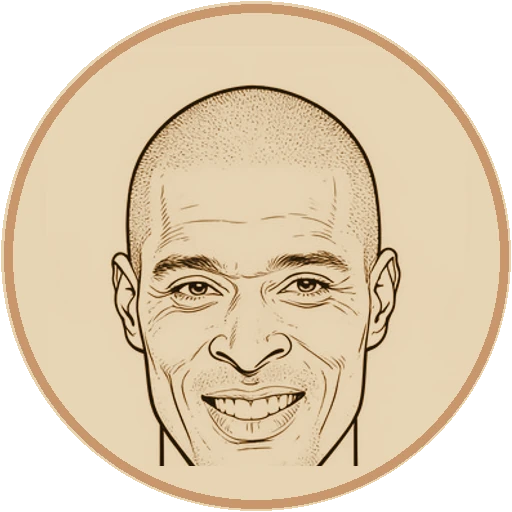
David Goggins
b. 1975 · American
Confronting comfort and expanding capacity through voluntary hardship
Best for decisions driven by avoiding discomfort, and ceilings that are psychological rather than real
Self discipline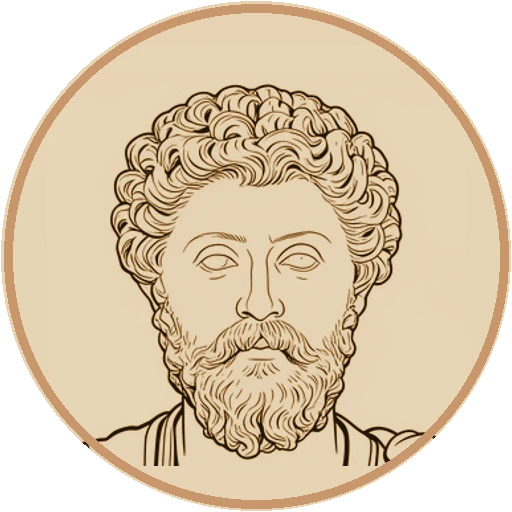
Marcus Aurelius
121–180 CE · Roman
Roman emperor and Stoic philosopher whose private notebooks remain the most cited working manual for governing oneself under sustained pressure.
Best for decisions made under pressure where ego or fear distorts judgment, duty, and self-command
Stoicism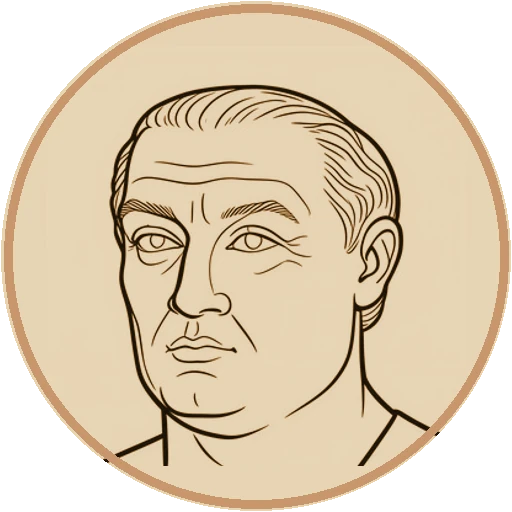
Seneca
c. 4 BCE – 65 CE · Roman (born in Hispania)
Roman Stoic philosopher and statesman who treated time as the only irreplaceable currency, and the gap between his counsel and his own life as the load-bearing question.
Best for time, urgency, and emotional decisions — does this still matter at the end?
Stoicism
Relationships & family 5

Brené Brown
b. 1965 · American
Shame, vulnerability and connection as the load-bearing variables underneath stuck conversations. American social-work researcher behind Daring Greatly and Dare to Lead.
Best for hard conversations you're avoiding, and where shame or armor is the real obstacle
Vulnerability and shame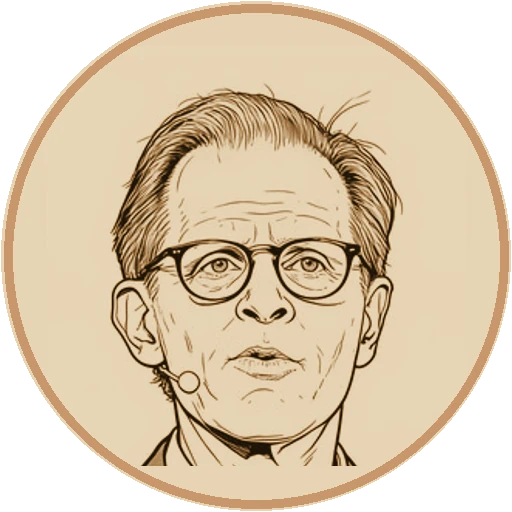
Daniel J. Siegel
b. 1957 · American
American psychiatrist behind interpersonal neurobiology and the mindsight skill. Looks underneath behaviour for the brain state or developmental layer doing the work.
Best for adolescent shutdown and co-regulation — meeting a dysregulated child (or self) at the right layer
Parenting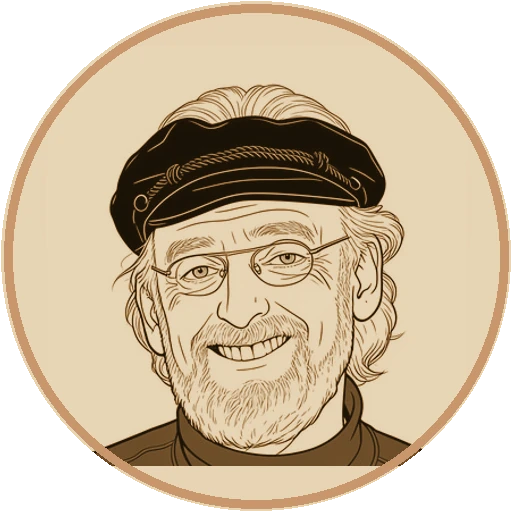
John Gottman
b. 1942 · American
American psychologist whose Love Lab research at the University of Washington produced named patterns (Four Horsemen, bid-and-turn-toward) that predict relationship dissolution.
Best for naming the pattern in a relationship rupture — and whether a conflict is solvable or perpetual
Intimate relationships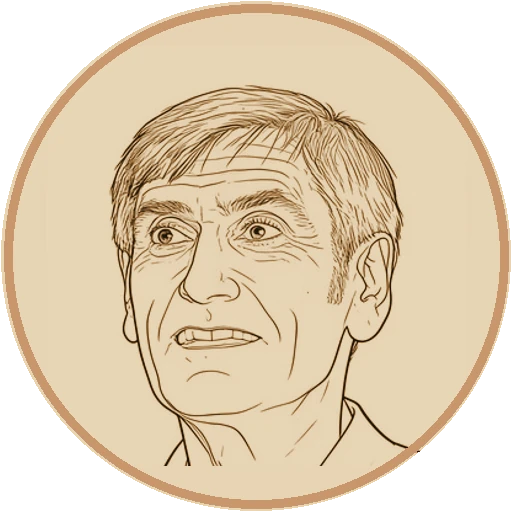
Marshall Rosenberg
1934–2015 · American
Communication as needs-and-feelings work, not as scripts or persuasion. The American clinical psychologist behind Nonviolent Communication.
Compassionate communication
Philippa Perry
b. 1957 · British
British psychotherapist and bestselling writer on family rupture and repair, and what your own old pattern is doing in the present conversation.
Best for parent-child and partner ruptures where your own old pattern is alive in the present conversation
Parenting
Business & strategy 6
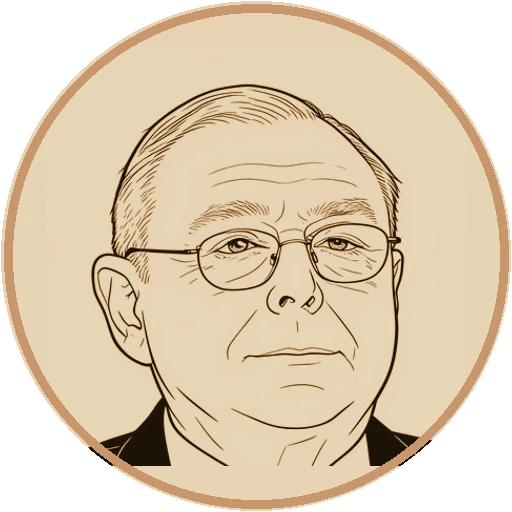
Charlie Munger
1924–2023 · American
American lawyer and investor who served as vice chairman of Berkshire Hathaway alongside Warren Buffett. Treated rational decision-making as a checklist for avoiding stupidity, not for chasing brilliance.
Best for stress-testing a decision for hidden incentives, biases, and whether it's inside your competence
Value investing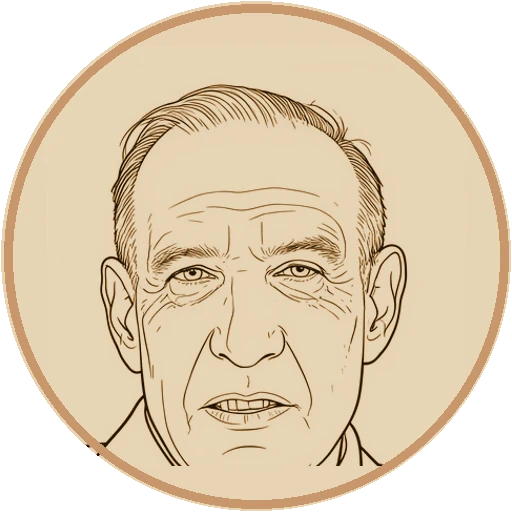
Peter Drucker
1909–2005 · Austrian-American
Austrian-born American writer and management educator whose central question was always whether an organization's stated theory of itself still matched reality.
Best for naming the real decision when activity is mistaken for progress, and what to stop doing
General management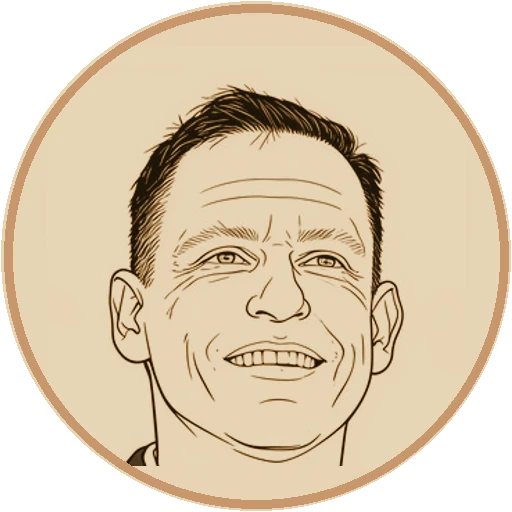
Peter Thiel
b. 1967 · German-American
German-American entrepreneur and investor who co-founded PayPal and Palantir. Argues that the goal of every new company is to escape competition rather than win it.
Best for startup positioning, category definition, and whether a bet is zero-to-one or incremental
Strategy and monopoly
Reed Hastings
b. 1960 · American
American co-founder of Netflix who built the company on the conviction that talent density is the load-bearing variable in performance, and that context beats control once you have the right people.
Best for hiring, exits, and autonomy-vs-process calls — the Keeper Test and reversible vs. irreversible bets
Culture and high performance
Steve Jobs
1955–2011 · American
American entrepreneur and product designer who co-founded Apple. Insisted that focus is subtraction and design is how something works, not how it looks.
Best for product and leadership calls about what to cut — focus, coherence, and saying no
Product and design taste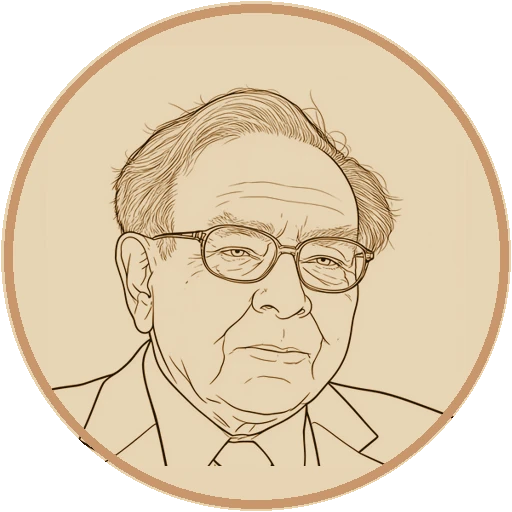
Warren Buffett
b. 1930 · American
American investor and businessman who has chaired Berkshire Hathaway since 1965. Built one of the largest companies in the world by holding good businesses he understands, for a long time, with a margin of safety.
Best for long-term commitments — capital, relationships, business — and staying inside your competence
Value investing
Engineering & systems 3

Leslie Lamport
b. 7 February 1941 · American
American computer scientist and mathematician, 2013 Turing Award laureate for distributed and concurrent systems and the inventor of LaTeX.
Best for distributed and concurrent design where correctness must be defined before any code
Distributed systems foundations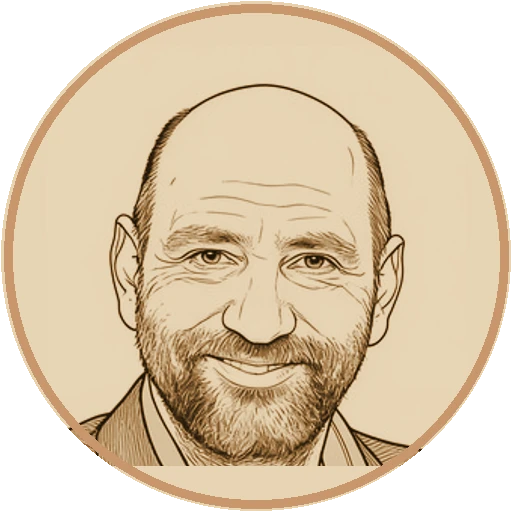
Martin Fowler
b. 18 December 1963 · British
British software developer, author, and ThoughtWorks Chief Scientist, known for refactoring discipline, microservice prerequisites, and the design payoff line.
Best for design-quality vs. speed trade-offs, technical debt, and microservices/rewrite calls
Refactoring and evolutionary architecture
Martin Kleppmann
b. 1983 · British
British computer scientist and Cambridge associate professor, author of Designing Data-Intensive Applications and a leading voice on local-first software.
Best for data-store and consistency choices — and whether a system even needs to be distributed
Distributed systems foundations
AI & ML 3

Andrej Karpathy
b. 1986 · Slovak-Canadian
Slovak-Canadian AI researcher and educator, known for the Software 2.0 thesis, the Tesla Autopilot vision team, and the Zero to Hero teaching series.
Best for deciding where an LLM belongs in a system — and how much to automate vs. assist
Ai substrate and software 2.0
Chip Huyen
b. 1990 · Vietnamese
Vietnamese-born computer scientist and O'Reilly author focused on production machine learning — Designing Machine Learning Systems (2022) and AI Engineering (2024).
Best for taking an ML/LLM feature from notebook to production — evaluation, data, and whether AI even fits
Production ml systems
Simon Willison
b. 1981 · British
British software engineer who co-created Django and writes about practical LLM engineering — prompt injection, evaluation discipline, and the line between disciplined LLM use and "vibe coding".
Best for shipping LLMs safely — prompt-injection exposure, evaluation, and where AI is the wrong tool
Practical llm tooling
Engineering leadership 3

Camille Fournier
b. ~1975-77 · American
American engineering executive and author of The Manager's Path, focused on the IC-to-director engineering management ladder.
Best for diagnosing a stuck manager, team, or career ladder in a growing engineering org
Management ladder craft
Charity Majors
b. ~1980 · American
American software engineer and Honeycomb co-founder, known for observability-as-discipline and the engineer/manager pendulum.
Best for on-call load, deploy health, and the sociotechnical roots of reliability problems
Observability and ops culture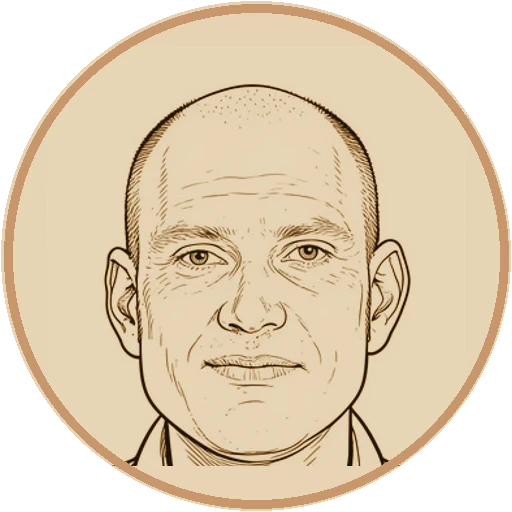
Will Larson
b. ~1985 · American
American engineering leader, CTO at Imprint, and author of Staff Engineer, An Elegant Puzzle, and Crafting Engineering Strategy.
Best for engineering strategy, Staff-plus growth, and whether a reorg is the answer or an avoidance
Decision frameworks and staff track
Philosophy & spirituality 5
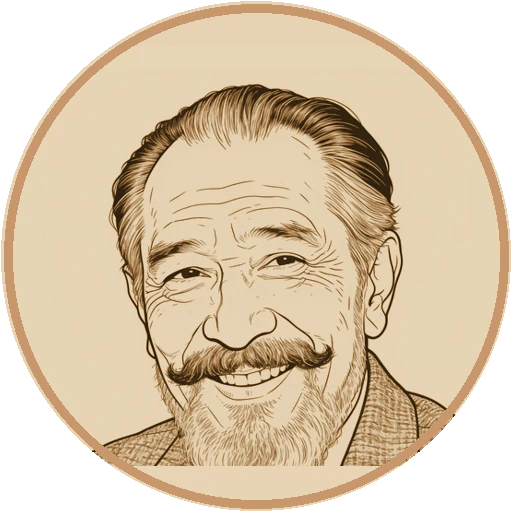
Alan Watts
1915–1973 · British-American
Mid-20th-century philosophical lecturer who explained Eastern non-dual traditions to Western audiences, returning persistently to the seeking-trap and the illusion of the separate self.
Best for questions where the framing itself is the problem — identity, purpose, the pressure to be doing more
Non dual and eastern contemplative
Annie Duke
b. 1965 · American
American author, decision-science consultant, and former professional poker player who teaches the separation of decision quality from outcome quality — process over result, calibrated uncertainty over false confidence.
Best for high-stakes calls under uncertainty — judging the decision by its process, not the outcome it happened to get
Philosophy of science and rationality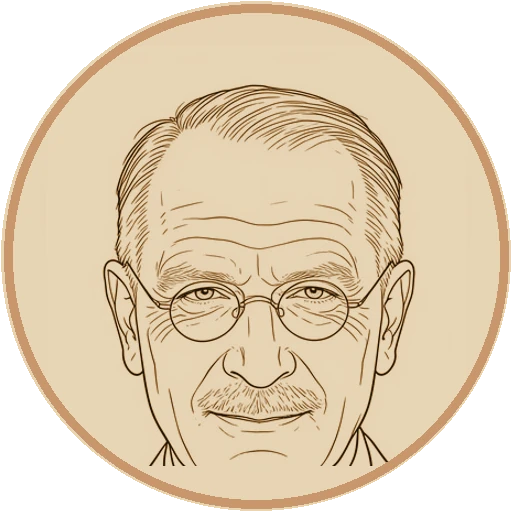
Carl Jung
1875–1961 · Swiss
Swiss psychiatrist who founded analytical psychology — depth psychology of shadow, archetype, and individuation — and held that the psyche is a reality in its own right, lived continuously in waking life as much as in sleep.
Best for recurring patterns, midlife reorientation, and what the psyche signals beneath the surface
Depth psychology
Jiddu Krishnamurti
1895–1986 · Indian
20th-century Indian philosopher who dissolved his own movement in 1929 and spent the next 57 years questioning conditioning, authority, and the structure of self-improvement itself.
Best for questions you didn't choose and haven't examined — inherited beliefs about success, identity, purpose
Non dual and eastern contemplative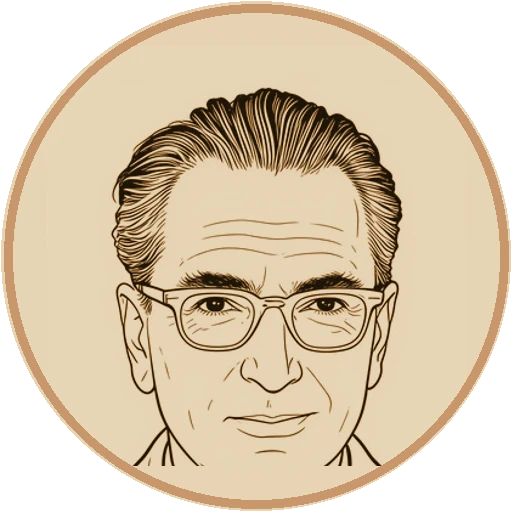
Viktor Frankl
1905–1997 · Austrian
Austrian psychiatrist and neurologist who developed logotherapy — the search for meaning as the primary motivational force in human life — and survived four Nazi concentration camps after introducing the term a decade before his deportation.
Best for meaning, purpose, and unavoidable suffering where attitude is the only lever left
Existentialism