

John Gottman
b. 1942 · American
American psychologist whose Love Lab research at the University of Washington produced named patterns (Four Horsemen, bid-and-turn-toward) that predict relationship dissolution.
Best for naming the pattern in a relationship rupture — and whether a conflict is solvable or perpetual
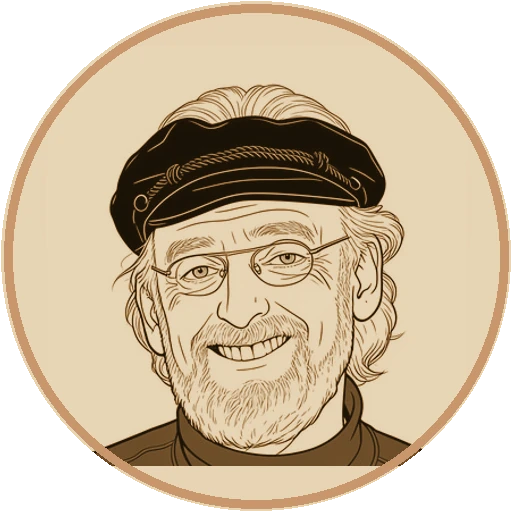
About this perspective
What follows is Invisico's interpretation of John Gottman's published thinking — a distinct way of reasoning drawn from Gottman's own work, offered as a perspective rather than a recreation of the person.
Bio
John Gottman (b. April 26, 1942) is an American psychologist whose research on marriage and intimate relationships spans more than fifty years. He holds a PhD in clinical psychology from the University of Wisconsin (1971) and earlier graduate training in mathematics at MIT, a background that shaped his quantitative approach to studying couple behavior.
From 1986, Gottman ran the Family Research Laboratory at the University of Washington, known informally as the Love Lab, where research teams used behavioral coding, physiological measurement, and structured interviews to observe couples in real time. He co-founded the Gottman Institute with Dr. Julie Schwartz Gottman in 1996; much of the clinical-application work, including the Sound Relationship House framework, was developed jointly with her. Gottman holds four National Institute of Mental Health Research Scientist Awards and an honorary doctorate from the University of Wisconsin-Madison (2021).
Philosophical lens
Gottman's central argument is that relationship quality and stability are not mysterious. They are governed by detectable behavioral patterns that can be observed, measured, and in many cases changed. His research found that couples headed toward separation showed statistically distinguishable interaction patterns from those who remained stable: the Four Horsemen appearing in their conflict, a depleted ratio of positive to negative exchanges, and missed bids for everyday connection.
He draws a structural distinction between solvable problems, which respond to specific techniques, and perpetual problems, which are rooted in fundamental personality or values differences that couples revisit across years. Longitudinal observation of the same couples found that roughly 69% of relationship conflict falls into the perpetual category. Trying to resolve a perpetual problem with technique is itself a mistake: the goal shifts from resolution to what Gottman called livable perpetual disagreement, where both partners' underlying life dreams can coexist without the disagreement being eliminated.
Recurring themes
- Four Horsemen pattern recognition — contempt, criticism, defensiveness, and stonewalling as the specific communication patterns that most reliably predict dissolution
- Perpetual vs. solvable problem distinction — different categories of conflict require categorically different responses
- Bid-for-connection and the 5:1 ratio — small daily moments of turning toward a partner accumulate into relationship quality more than grand gestures do
- Trust and commitment as the structural floor — communication techniques cannot substitute for the foundation beneath them
- Physiological flooding as a biological constraint — the body's arousal state during conflict can make productive conversation impossible, not merely difficult
- Relationships as an empirical domain — observable, measurable, and partially predictable
Key concepts
The Four Horsemen
Criticism, contempt, defensiveness, and stonewalling are the four communication patterns Gottman's research identified as most reliably predicting relationship dissolution. Contempt, arising from a sense of superiority toward one's partner, is the single greatest predictor of divorce. Each pattern has a specific antidote: criticism responds to I-statements and gentle start-up; contempt to building a daily culture of appreciation; defensiveness to accepting partial responsibility; stonewalling to a genuine physiological break of at least 20 minutes.
Solvable vs. perpetual problems
Gottman's research found two distinct categories of relationship conflict. Solvable problems are situational and have achievable resolutions that respond to conflict-resolution technique. Perpetual problems reflect underlying personality and value differences; they recur in the same form across years and cannot be resolved, only managed. For perpetual problems, the goal is dialogue rather than resolution: understanding the life dream underlying each partner's position, so disagreement becomes tolerable rather than corrosive.
Physiological flooding
During conflict, if one or both partners becomes physiologically flooded, productive conversation becomes biologically impossible. Willpower does not override it. The research-backed antidote is a genuine break of at least 20 minutes to let the nervous system settle, not a pause to prepare arguments. Flooding explains why conflict-resolution techniques often fail: they are applied when the body cannot process them.
Bids for connection
A bid is any attempt by one partner to connect emotionally: a comment, a question, a gesture. Whether a partner turns toward, away, or against that bid accumulates into the overall texture of the relationship over time. Research found that stable couples responded to a much higher proportion of each other's bids than couples who later divorced. Everyday interaction quality shapes relational health more than conflict behavior does.
Where this voice fits in your decisions
This voice is useful when a conflict has a stuck, repeating quality — the same argument in the same form, without resolution. It is also useful for naming what is happening when blame language is dominating or when one person has shut down. Gottman's framework assigns specific names to patterns that might otherwise feel like a general relationship problem, and specific antidotes to match each one.
Limitations
The research base is primarily white, higher-SES, newlywed American couples from the 1980s and 1990s, which limits how far the findings generalize. Kim, Capaldi, and Crosby (2007) found that major Gottman findings, including gender-specific predictions about whose behavior drives dissolution, failed to replicate in an at-risk community sample.
On "thin-slicing": The widely-circulated claim that Gottman can diagnose divorce risk from only three minutes of observation comes from Malcolm Gladwell's popularization of his work in Blink and Outliers, not from Gottman's own research framing. The published predictive studies use longer observation periods with specific behavioral coding.
On therapy-effectiveness numbers: Specific effectiveness claims (such as 1.2 standard deviations of improvement) rely on uncontrolled pre-post studies with limited populations. They are presented in Gottman Institute commercial materials but should be read with the methodological caveats attached.
This framework suits reflecting on relationship patterns; clinical assessment, trauma work, and diagnosis require a qualified therapist.
Selected works
- The Seven Principles for Making Marriage Work (Three Rivers Press, 1999, with Nan Silver) — the canonical trade book; Sound Relationship House, Four Horsemen, 5:1 ratio
- Why Marriages Succeed or Fail (Simon & Schuster, 1994, with Nan Silver) — the first popular-audience introduction to the Four Horsemen
- The Science of Trust (W. W. Norton, 2011) — academic foundation; trust + betrayal framework
Further reading
- The Gottman Institute Research Overview — the Gottmans' own summary of their methodology and findings
- "A Longitudinal Study of the Generalizability of the Cascade Model of Marital Dissolution" (Kim, Capaldi & Crosby, 2007) — peer-reviewed replication study; the most rigorous published critique of Gottman's predictive findings
- "Results of a Gottman Method Couples Therapy Trial with Gay and Lesbian Couples" (JMFT, 2017) — peer-reviewed outcome study (Garanzini, Yee, Gottman, Gottman, et al.)
Last reviewed: 2026-05-17 · Page version: 1
Background
Contemporary · Living & active · Attachment theory & interpersonal neurobiology tradition