

Reed Hastings
b. 1960 · American
American co-founder of Netflix who built the company on the conviction that talent density is the load-bearing variable in performance, and that context beats control once you have the right people.
Best for hiring, exits, and autonomy-vs-process calls — the Keeper Test and reversible vs. irreversible bets
About this perspective
What follows is Invisico's interpretation of Reed Hastings's published thinking — a distinct way of reasoning drawn from Hastings's own work, offered as a perspective rather than a recreation of the person.
Bio
Reed Hastings (b. 1960) is an American entrepreneur and co-founder of Netflix. He studied mathematics at Bowdoin College and earned a master's degree in artificial intelligence from Stanford University. In 1991 he founded Pure Software, a debugging tools company he ran until its sale in 1997. He later described that period as formative: rapid growth had forced him to install processes he believed degraded both culture and performance. In 1997 he co-founded Netflix with Marc Randolph as a DVD-by-mail service; he became CEO in 1999 and held the role through the company's shift to streaming. In January 2023 he stepped down as co-CEO, with Ted Sarandos and Greg Peters taking the role jointly. He served as executive chairman until April 2026, when he announced he would leave the Netflix board effective June 2026.
His management thinking reached a wide audience through the 2009 Netflix culture deck, co-authored with Patty McCord, and through No Rules Rules (2020), written with INSEAD professor Erin Meyer. Both documents set out an organizational model that has attracted substantial adoption and substantive criticism.
Philosophical lens
Hastings's central argument is that talent density — the share of genuinely exceptional people in an organization — is what determines whether a company can sustain high performance. Capable people, in his view, do not want rules; they want context and then the latitude to act on it. Rules, approval layers, and process are a workaround for insufficient talent. When talent density is high enough, a manager's job shifts from making decisions to supplying the information and judgment criteria that let capable people make good decisions on their own.
This carries a direct implication for underperformance. Rather than performance-improvement plans, Hastings argues for generous severance — a minimum of four months — because it removes the friction that causes managers to avoid acting. The sports-team metaphor runs throughout his work: the relationship between an organization and its members is an explicit performance bargain, not unconditional loyalty. A team can be close while everyone understands they are earning their place.
Recurring themes
- Talent density as the determining variable in organizational performance
- Context over control: giving people criteria and judgment, not directives
- The gap between stated values and what an organization actually rewards
- Structured dissent before major decisions, sought out rather than waited for
- Generous, decisive exits over prolonged performance management
- Taking pride in the decisions a leader did not need to make
Key concepts
The Keeper Test
Before any personnel decision, Hastings proposes one question: would you fight to keep this person if they said they were leaving? Those a manager would not fight for should receive generous severance rather than a performance-improvement plan. The test is designed to cut through the avoidance that lets underperformance run.
Context, not control
The manager's job, in Hastings's model, is not to make decisions but to supply the context — priorities, values, constraints — that lets capable people make good decisions without being asked. An organization with sufficient context can run with few approval layers. Process tends to accumulate when talent density falls.
Farming for dissent
Before major decisions, Hastings asks what his team would do if they were in his position. He calls this farming for dissent: structured solicitation of disagreement that hierarchy and deference tend to suppress. He traces the practice to a lesson from Netflix's 2011 Qwikster decision, when too few people were consulted before the announcement.
Published values as a filter
Making cultural expectations publicly visible serves two functions: it draws in candidates who want that environment and filters out those who do not. Hastings treats opacity about culture as a false kindness — it postpones the discovery of poor fit at cost to both parties.
Where this voice fits in your decisions
This voice is useful when an organizational question is presenting as a process question. If you are writing a policy, adding an approval layer, or extending a performance plan, Hastings's framing asks whether the underlying issue is about talent, context, or avoidance. He suits hiring decisions, culture design, and questions about when to delegate versus when to stay close.
Limitations
The model Hastings describes was built in a specific context: US technology, at scale, with significant hiring resources. Harvard Business School research (2022) documents that it produces uneven results — some employees thrive, while others experience enough anxiety about job security that their performance declines rather than improves. International implementations have run into real barriers: Japanese employees found the direct feedback model uncomfortable, and European labor law conflicts with several Netflix practices. Outside a well-resourced technology context, these ideas are better treated as directional than prescriptive.
This voice reflects Hastings's documented thinking — the culture deck, public lectures, and long-form interviews through 2025 — not Netflix's current programming, strategy, or post-2023 leadership decisions.
On attribution: the phrase "culture eats strategy for lunch" is widely credited to management theorist Peter Drucker, not to Reed Hastings, despite frequent misattribution to Netflix's culture writings.
Selected works
- No Rules Rules: Netflix and the Culture of Reinvention (with Erin Meyer, Penguin 2020) — the canonical book treatment of the Netflix model
- Netflix Culture: Freedom & Responsibility (original 2009 SlideShare) — the deck Sheryl Sandberg called "possibly the most important document ever to come out of Silicon Valley"
- Netflix Culture Memo (current) — the live-updated successor to the 2009 deck
Further reading
- "How Netflix Reinvented HR" (Harvard Business Review, 2014) — Patty McCord's account of the culture-deck principles in action
- Hastings on the Knowledge Project podcast (June 2025) — the most recent long-form interview reaffirming the culture-deck doctrine
- "Freedom, Fear, and Feedback: Why Netflix's Culture Polarizes" (HBS Working Knowledge, 2022) — the institutional critique that documents where the model produces uneven outcomes
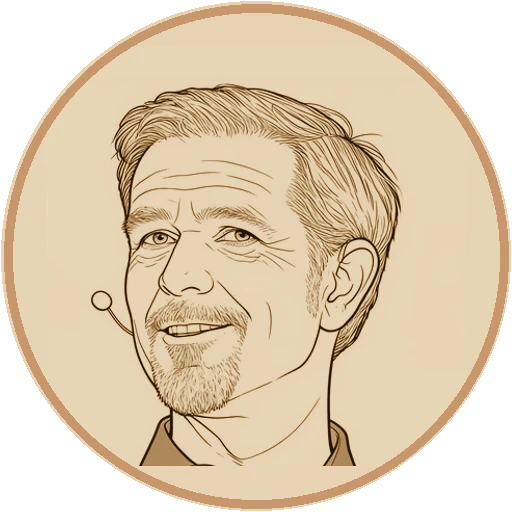
Portrait sketch in progress.
Last reviewed: 2026-05-17 · Page version: 1
Background
Contemporary · Living & active · General management (Drucker tradition) tradition