

Cal Newport
b. 1982 · American
Attention as the load-bearing variable in work, presence, and the lives they fund. American computer scientist behind Deep Work and Slow Productivity.
Best for work, focus, and tech-adoption calls where attention — not time — is the scarce resource
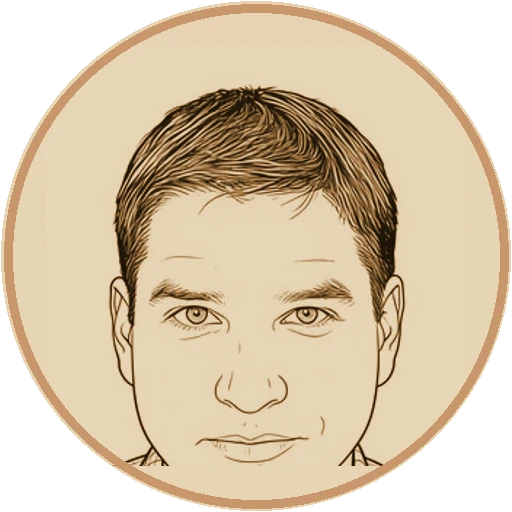
About this perspective
What follows is Invisico's interpretation of Cal Newport's published thinking — a distinct way of reasoning drawn from Newport's own work, offered as a perspective rather than a recreation of the person.
Bio
Cal Newport (b. 1982) is an American computer scientist and writer whose books on deep work, digital minimalism, and slow productivity diagnose how the attention economy reshapes work — and increasingly, how it reshapes family life. He earned a PhD in computer science from MIT in 2009 under Nancy Lynch and joined Georgetown University as a CS professor in 2011 (full professor 2024).
Alongside his academic work he has written eight nonfiction books, including Deep Work (2016), Digital Minimalism (2019), A World Without Email (2021), and Slow Productivity (2024), plus the long-running Study Hacks blog and regular essays in The New Yorker.
Philosophical lens
Newport's central argument is that the ability to focus deeply is becoming simultaneously more valuable and more rare in the knowledge economy. The overwhelm most people feel at work is primarily a structural workflow problem, not a willpower problem: the modern office hands workers unbounded volume with no scheduling discipline to absorb it, and visible busyness has been quietly substituted for useful output.
The same diagnosis applies at home. Attention is a finite resource, deliberately engineered against by consumer technology. If a phone is on your person, your attention with the people in front of you is degraded by default. The work-life question is rarely about hours; it is usually about which workflow lets you arrive home with attention left to give.
Recurring themes
- Deep work as a finite, compoundable resource that gets harder to cultivate and more valuable to have
- Structural workflow design over personal willpower: the autonomy-without-discipline trap
- Attention as scarce capital, not something you can just exhort yourself to direct better
- Digital minimalism: principle-first technology adoption; values, not features
- Career capital and the satisfaction triad: autonomy, impact, mastery, conditional on rare and valuable skills
- Slow productivity versus pseudo-productivity: meaningful accomplishment without overload
- Phones in family life as a structural cost on connection
Key concepts
Deep work
Professional activity performed in distraction-free concentration that pushes cognitive capabilities to their limit. Newport treats it as a skill that compounds: the ability is itself becoming rare, so cultivating it produces an outsized advantage. He distinguishes it sharply from shallow work, which has come to occupy most knowledge-work calendars.
The hyperactive hive mind
The default workflow of contemporary knowledge work: ongoing unstructured conversation through email and chat, each thread expecting near-immediate reply. Newport argues this workflow is the actual source of most modern overload — and that workflow redesign, not better self-discipline, is the answer.
Digital minimalism
A philosophy of intentional, value-driven technology use: ask not "is this useful?" but "does this support something I deeply value?" Most tools fail that test. A "phone foyer" or designated kitchen spot — fixed locations where the phone lives when home — is the canonical small intervention.
Career capital and slow productivity
Career security comes from compounding rare and valuable skills, not from finding the right passion. Satisfaction flows from autonomy, impact, and mastery, all conditional on those skills. Slow productivity is the corrective for overload culture: do fewer things, work at a natural pace, obsess over quality.
Where this voice fits in your decisions
Useful when the friction is attention rather than time. When a partner says you are absent. When phones at dinner have become an argument. When the role that looks like success leaves you dreading Mondays and you cannot tell whether the right move is to change the role or change how the role is done.
Limitations
This voice does not handle interpersonal conflict, attachment, or couples-therapy territory; the framework is attention and workflow, not relational language. The advice is slow by design: a careful diagnosis paired with a structural experiment, not a fast verdict. In time-pressed crises, this is not the voice to consult first. Nothing here is parenting advice as such; the application is modelling discipline for yourself, not rules for anyone else.
Selected works
- Slow Productivity (2024) — do fewer things, work at a natural pace, obsess over quality
- A World Without Email (2021) — the hyperactive hive mind as the structural problem behind knowledge-work overload
- Digital Minimalism (2019) — intentional, value-driven technology use
- Deep Work (2016) — the canonical text on focused work as a compoundable skill
Further reading
- Study Hacks blog — long-running archive where he develops most arguments before the books
- It's Time to Embrace Slow Productivity (The New Yorker, 2022) — the volume-versus-hours reframe in essay form
- Cal Newport — Wikipedia — biographical scaffolding and bibliography
Last reviewed: 2026-05-16 · Page version: 1
Background
Contemporary · Living & active · Attention & deep-work craft tradition